
Energy Affordability
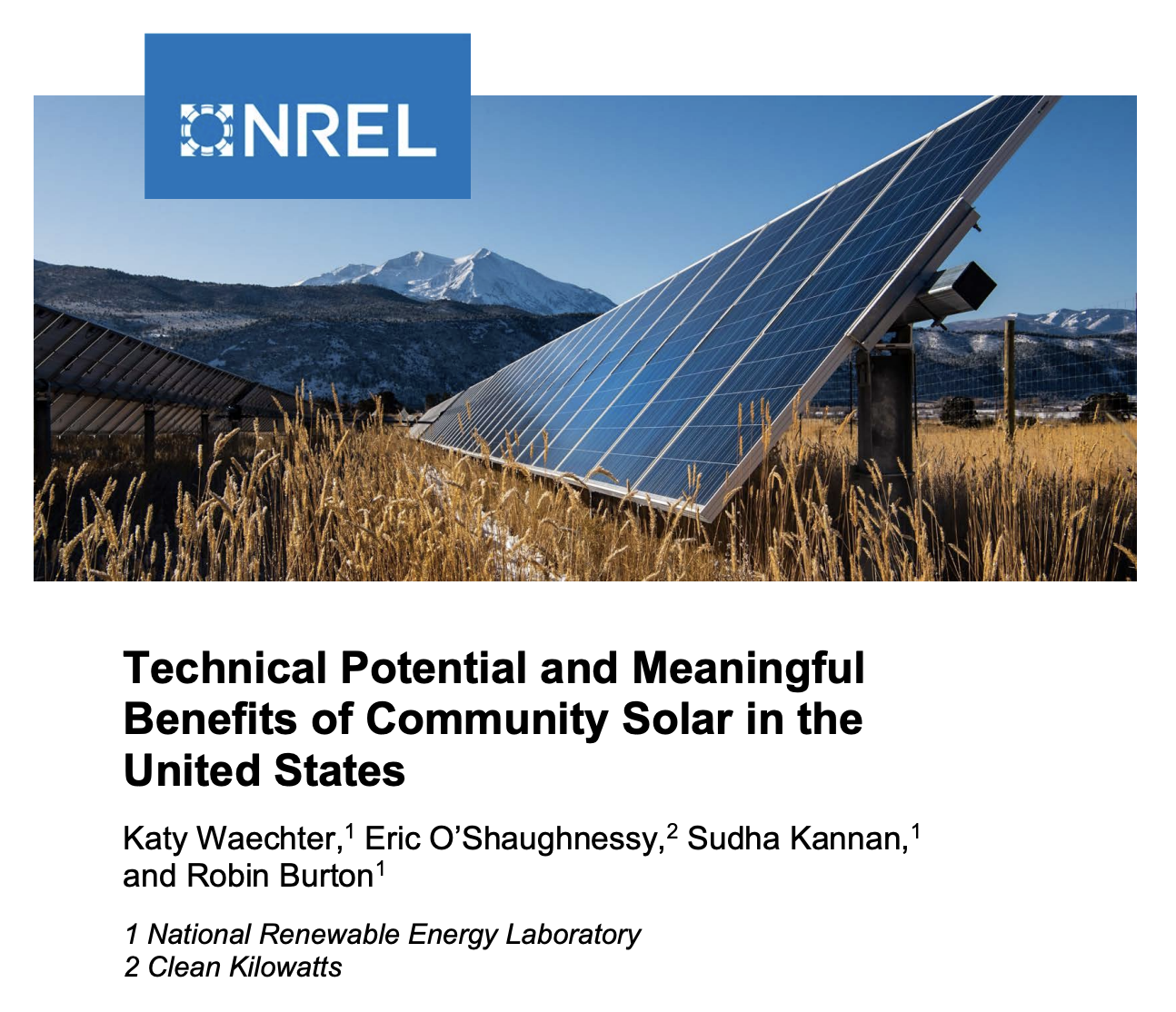
If all technically viable potential community solar is deployed, it could save customers billions of dollars on their electricity bills, serve tens of millions of LMI households, generate billions of dollars in grid resilience and grid service values, drive billions of dollars of economic benefits into host communities, and support hundreds of thousands of jobs.Technical Potential and Meaningful Benefits of Community Solar in the United States - National Laboratory of the Rockies (Previously NREL). Read more here: https://docs.nrel.gov/docs/fy24osti/87524.pdf
COMMUNITY SOLAR & ENERGY AFFORDABILITY: Lowering Energy Bills for Everyone
View our Energy Affordability Handout
Community solar is generating much-needed ratepayer savings in more than half of all U.S. states.
Community solar allows households, renters, and businesses to benefit from low-cost solar energy without installing panels on their own property.
While the economic benefits of subscribing to community solar are clear, these projects also help control energy bills for everyone else by driving down the wholesale cost of energy, reducing peak demand, helping avoid costly upgrades to the grid, and making the energy system operate more efficiently.
Direct Savings for Subscribers
Guaranteed bill savings
- Current legislation in PA requires that all community solar subscribers save on their energy bill. Nationally, community solar discounts typically fall between 5-20%
- Low-income families spend, on average, 8.6% of their household income on energy bills compared to 3% for higher-income households
Benefits for All Ratepayers (Not Just Subscribers)
Meeting more of our energy demand at home saves us all money
- Decreased wholesale energy costs
- When local solar feeds energy into the grid, less high-cost energy is needed from the regional wholesale energy market, bringing down the cost of energy for everyone.
Shovel-ready and quick to deploy
- Large energy projects can’t come online fast enough to meet rising energy demand. Community solar projects are quick to build, and usually small enough to only require local approval, side-stepping multi-year regional delays.
Reduces Peak Demand on the Grid
- A major driver of energy costs is how much energy is needed during the most energy-intensive hours (peak times).
- Our region’s energy demand peaks in the summer, which is when distributed solar is most effective.
- When paired with energy storage, distributed energy can do even more to address peak energy demand by acting as a sponge that can save energy in times of abundance for use in times of energy scarcity.
| On June 23 2025, a particularly hot day, the wholesale cost of energy was more than 20x as high as the previous week in the Mid-Atlantic. |
Avoids Costly Infrastructure Upgrades
The cost of moving energy (transmission costs across long distances, and distribution costs for local delivery) accounts for a large portion of energy bills. Strategic siting of community solar can bring new energy online close to where it’s needed, while avoiding more expensive infrastructure investments.
- Due to community solar’s flexibility and size, under baseline conditions these projects rarely require additional distribution-infrastructure investments. In fact, they are more likely to defer distribution system upgrades while potentially reducing line losses.
- Given that peak transmission usage is the primary cause of new transmission investments, local solar can generate meaningful ratepayer savings in avoided transmission costs.
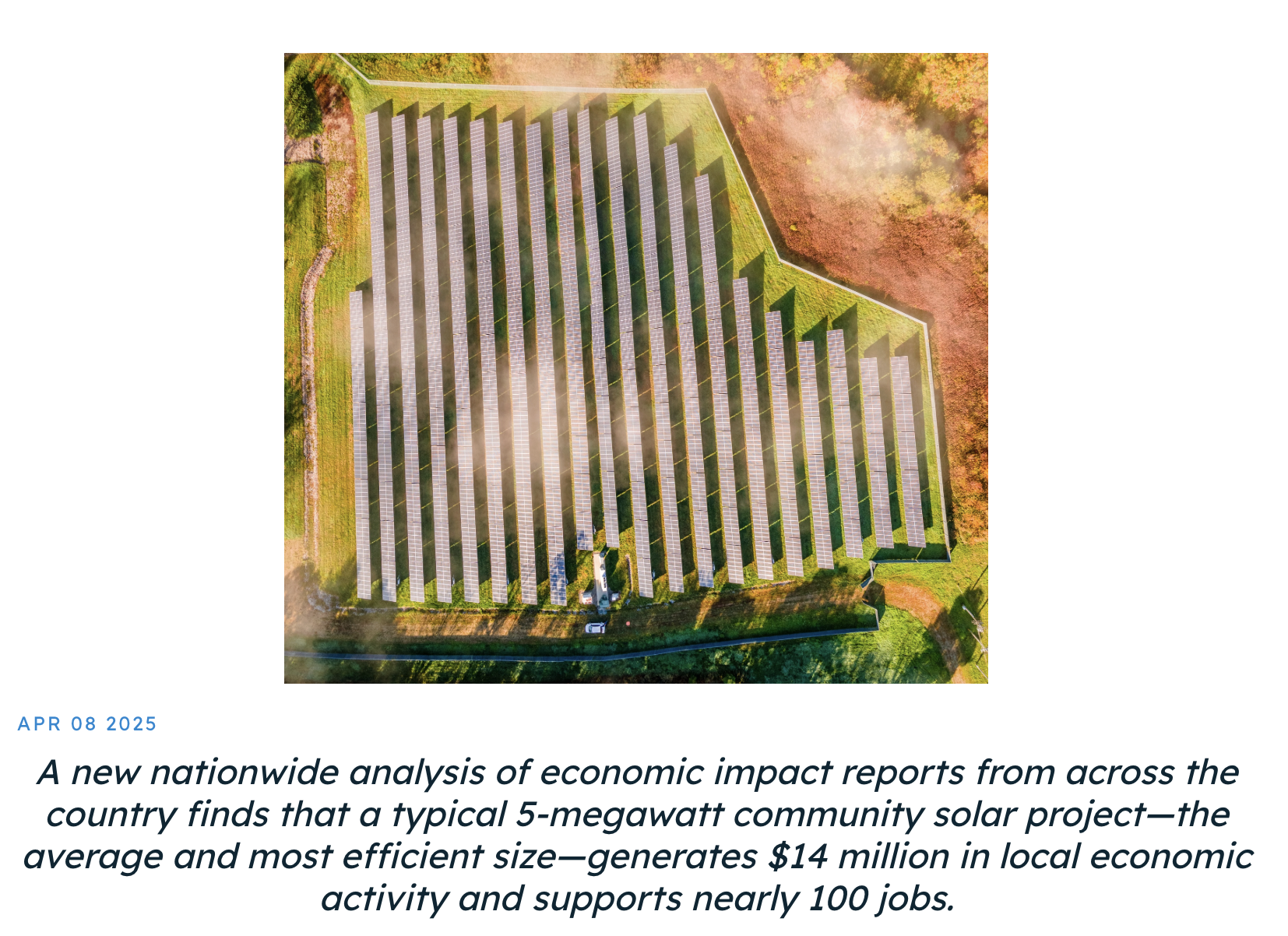
At scale, just 1 gigawatt (GW) of community solar development can support over 18,000 local jobs and generate $2.8 billion in state economic activity.Coalition for Community Solar Access. Read more here: https://communitysolaraccess.org/news/with-demand-soaring-states-look-to-community-solar-for-jobs-power-and-stability
Reduces Line Losses
Generating power closer to where it’s used improves grid efficiency:
- In general we lose about 5% of the electricity generated through transmission and distribution in the grid
- Because distributed energy is typically used on site or nearby, these resources can significantly reduce energy losses that occur when electricity is carried on transmission lines.
Job Creation:
- Penn State researchers estimate that nearly 250 community solar projects (already planned in PA but awaiting permission to break ground) would result in an initial 11,631 jobs and $1.8 billion in economic output, followed by over 500 jobs and an additional $83.3 million in economic output each year.
| A 2025 study by Aurora Energy Research, focused on California, found that community solar and storage reduces congestion, displaces costly gas generation, and makes the entire system more efficient, with everyone benefiting—including those who don’t subscribe. They found that the energy savings from community solar and storage were more than double the capital costs of the program. |
THE BOTTOM LINE
Community solar creates a “win-win-win” scenario:
- Subscribers save money on their bills with guaranteed discounts.
- Non-subscribers benefit from reduced peak demand, avoided infrastructure costs, and lower wholesale prices.
- Communities gain jobs, economic development, and cleaner air.